How to Start A Coffee Cart | Our 5 Tips to Get you Started!
Check out our coffee cart packages to get started!
Transcript
Hey there, Mac from Prima here! If you’ve ever thought about starting a coffee cart - YES! You absolutely should. It’s fun, it’s mobile, it smells like espresso all of the time… but also, it’s a lot!
90% of it is just you playing barista, plumber, electrician, health inspector, and logistics coordinator all at once. But the other 10% is deeply rewarding. It’s the regulars who become friends, and the joy of building something that truly brings people together. It’s a hustle, but it’s a fulfilling, community-powered kind of hustle.
Today I’m sharing 5 tips for getting started the right way, based on my own very caffeinated experience. Stick around for a bonus tip at the end that’ll save you money, time, and possibly your sanity. Let’s dive in!
Tip 1: Create a Business Plan
Alright, tip number one: create a business plan. Now I know that sounds boring, but this is your roadmap. You want to start by figuring out your budget and the volume of drinks you expect to serve. Are you pulling 30 drinks an hour or 80? That number will drive almost every other decision you make, from your equipment to your menu to how big your power setup needs to be.
You also want to think about where you’ll actually be. Start reaching out to local businesses, markets, and festivals. Anywhere with foot traffic. Ask if they’ve hosted vendors before and if they’d be down to have you park your cart there.
And then there’s your marketing strategy. How are people finding you? Instagram? Word of mouth? Posters duct-taped to light poles? Build your hype before you even pull your first shot, because you need a way to connect with your audience.Tip 2: Know the Legal Requirements Before Spending
Tip number two , and I cannot stress this enough: do not spend a single dollar on gear or design before you talk to your local health department and know what’s legally required. Health codes vary wildly depending on where you are. In some counties, you’ll need a full commissary kitchen just to get licensed. In others, they’ll want three separate sinks - one for handwashing, one for dishes, and one for sanitizing. Others might say your espresso machine has to be NSF certified or else it’s a no-go. Can you serve dairy? Are coolers okay, or do you need a fridge with a temperature readout? The list goes on.
You do not want to be the person who drops $12,000 on a cart and a setup, only to be told that you can’t legally serve a single drink. So call your health department. Say, “Hey, I’m planning to open a mobile coffee cart. What are the requirements?” They’ll either send you a packet or schedule an appointment. It’s not always fun, but it’s free and it can save you money.
Pro tip: Ask to see a sample plan from a previously approved cart or trailer in your area. They might have one on file.
Tip 3: Curate Your Menu
Tip number three is to curate your menu. You’re not building a brick-and-mortar; you’re building a coffee cart. And that means your menu needs to be efficient, adaptable, and profitable. When we first launched, we leaned way too hard into espresso drinks. Turns out, when it’s 90 degrees out, no one wants a hot cappuccino. So we learned to build a menu that can be flexible. Look at the weather, the venue, and the crowd. Morning crowd? Maybe lean into espresso and batch drip. Outdoor festival in July? Think cold brew, iced beverages, and maybe a specialty drink or two.
Also, be prepared to go off menu occasionally. We forgot about kids on launch day, but thankfully, we had chocolate syrup, so we whipped up some chocolate milks. It’ll benefit you to have a few wildcards and non-caffeinated drinks ready to go.
And finally, maybe the most important part of this tip: alt milks might make your life easier. From a health department standpoint, non-dairy options like oat or almond milk are sometimes easier to store and serve without needing extra refrigeration or sanitation equipment, which means you can sometimes avoid that whole three-compartment sink setup I mentioned earlier.
Tip 4: Breakdown Your Equipment Needs
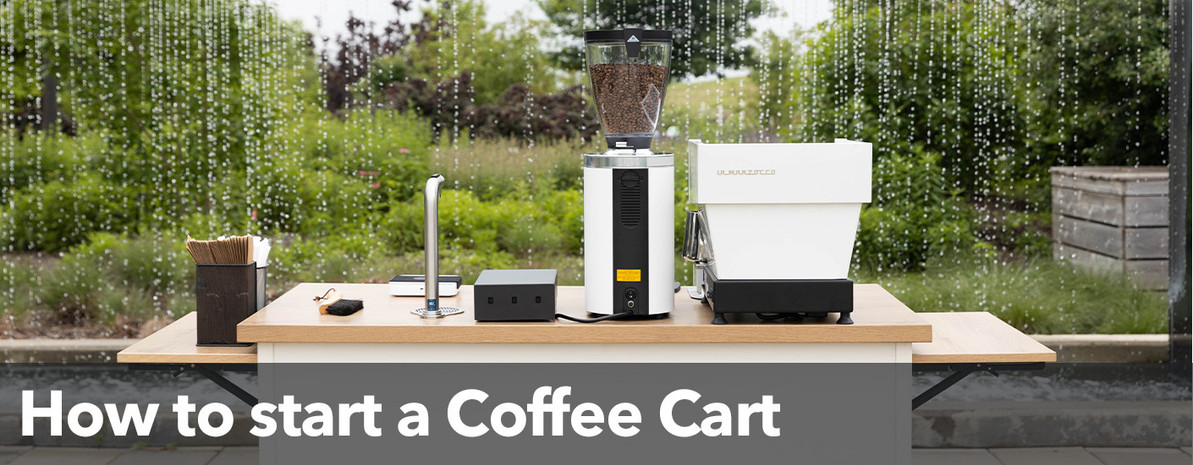
Tip number four is break down your equipment needs. Your menu and your expected volume are going to guide this, so be honest with yourself. You don’t need a $15,000 setup if you’re doing 20 drinks an hour at a farmer’s market. But if you’re planning to do high volume at a music festival? You’ll want something that can keep up. Start with the essentials. For most carts, you’ll need: a reliable espresso machine (probably 1-group or compact 2-group), a grinder (maybe two if you’re doing decaf or a secondary option), a water filtration setup, fridge or cooler for milk and alt milks, and a POS system.
Now depending on your setup, like if you’re on a trailer vs a push cart, you might also need: a power source, water pump and wastewater tank, and a sink system that satisfies your local health department.
And here’s something most people overlook: how are you transporting all this stuff? Unless your cart lives permanently in a food truck or trailer, you’re going to be loading in and out constantly. That means stairs, curbs, tight hallways, gravel, rain, the works. That’s why a folding cart is a game changer. Get something that collapses flat, fits in a regular car or small van, and is easy to lift with one or two people. Bonus points if it has lockable casters and quick-connect utility ports for water and power. This one detail can cut your setup and teardown time in half and save your back in the long run.
Tip 5: Test Your Workflow
Tip number five is to test your workflow. And I mean really test it! Once your gear is on your cart, don’t start drilling holes right away. Move things around. Make drinks. Adjust. Sleep on it. Then adjust again. Pretend you're in the middle of a rush. Can you steam milk without bumping into your grinder? Is your knock box too far to reach? Are your cups stacked in a way that slows you down? You’ll instantly notice things like, “Oh wow! I keep dripping milk all over my grinder,” or “Why is the trash so far away from where I need it?”
We rushed our workflow, and I still think about how much smoother things could’ve been if we had taken another couple of days to test it. Additionally, know that you need more counter space than you think. Between syrups, pitchers, grinders, cups, napkins, and more… it adds up. Build in extra shelves, bring a folding table, and get creative with storage. You’ll thank yourself later.
BONUS TIP!
Time for a bonus tip! If you're feeling overwhelmed or not sure where to start, you're not alone. There’s a lot to figure out.
James Weiler, our Commercial Sales Manager here at Prima, has helped many people launch their mobile coffee setups. Whether you’re wondering what gear makes the most sense, or just want someone to sanity-check your buildout plan, James can help you sort through it. You can schedule a free consultation with him at the link in the description. The Prima Coffee team has been through this, so we can point you toward the right tools for your goals and budget.
That wraps up my 5 tips for starting a coffee cart, plus a bonus tip to point you in the right direction! If you're ready to take the next step, Prima has a ton of helpful resources: a free 5-part Mobile Coffee Course, a vlog series where you can follow along as we build our cart from the ground up, and all the equipment and accessories you need to launch your own setup.
Best of luck getting your cart off the ground, and I’ll see ya in the next one!